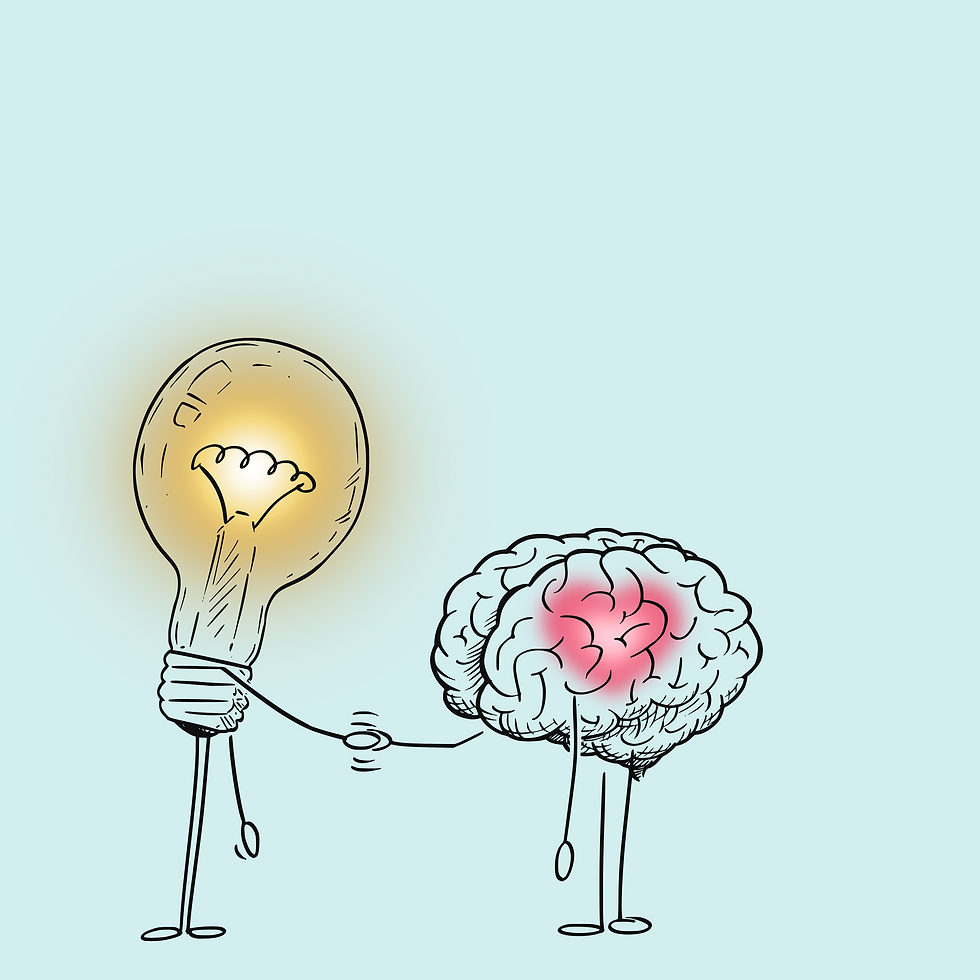
Episode 6: Love by Design (feat. Mike Lyons, Tino Chow)

Explore how designer Tino Chow uses love and empathy to drive innovation in business. Through storytelling, sociology, and real-world insight we discover how empathy-centered work can transform branding, culture, and community impact.
Scroll down to listen to more episodes

NOTE: Transcript was exported directly from Otter.ai. Please excuse us as we work toward cleaning up the transcripts in the future.
00:00
Jocelyn
00:05
Bell, welcome to from ideas to impact the show where students, professors and professionals seek to understand the overlap of creativity, innovation and a love ethic in various industries. I'm Jocelyn Bell, the professor of the human spark class at Bryant University, a class formerly known as the sociology of innovation and creativity, and we're in the segment of the podcast when we hear student reflections on and analyzes of the themes and ideas that emerged over the course of the class. Sometimes they used this final assignment as a chance to imagine what an episode of their own podcast would sound like. Other times, they put the episode together as part of the
00:56
larger story of the class. One thing that's consistent throughout this segment of the show is that each student invites you into their thoughts on the overlap of creativity, innovation and a love ethic.
01:14
Mike did very well on his individual case study of Tino Chow. Let's hear what he had to say. You welcome back to another episode of love by design featuring Tino Chow, where we explore love, creativity and innovation across industries. I'm Michael Lyons, and I'm so glad you're joining me today.
01:40
I'm diving into a powerful idea that love and empathy are just emotional values of moral choices. They're strategic tools that fuel creative success, strengthen organizations and drive innovation in meaningful ways. In today's episode, I'll take a closer look at the career and mindset of Tino Chow, a designer, veteran and entrepreneur who blends empathy, storytelling and business strategy to help companies and communities communicate their purpose and impact. Our guiding question today is, How can love shape the way we build and innovate in business? I'll examine this through sociological theory, personal narrative and research driven analysis. By the end of this episode, I hope you'll see that love is not just something nice to have. It's essential to building the future. Think of this as more than just a case study. This is an invitation to rethink what it means to do business with heart, to lead with care, and to innovate in ways that uplift others, whether you're a designer, entrepreneur, student or someone simply curious about how love can reshape the world, we're glad you're here.
02:49
Tino Chow's professional journey is not what you call regular he began his career as a military officer in Singapore, where precision, discipline and leadership were core values. But after his time in the military, he pursued art school. Yes, you heard that right military to art, and that mix of thinking paired with creative expression would eventually become a signature strength in his work. After art school, Tino immersed himself in the world of design and branding. He combined his skills to approach complex problems with empathy and order. He went on to found giant shoulders, a creative agency dedicated to brand strategy, design thinking and helping organizations tell their stories with heart. Over the years, Chow has partnered with Silicon Valley startups, social justice groups, nonprofits and global brands. What really sets him apart, and why we're focusing on him today is the way he integrates love into business, love in the sense of care, community and commitment. He doesn't just lead with strategy. He leads with empathy. He doesn't just design to impress. He designs to connect. He works bridges communities, helping clients move from confusion to clarity through human centered branding. He has also spoken about how he works closely with clients, not just to make things look good, but to ask hard questions, questions like, Who are you serving? What impact do you want to make? How does your story reflect your values? That kind of work takes courage and it takes love, and that's exactly what Tino models. Now let's hear directly from Tino in a recent guest discussion, he described himself as a three headed monster. Each head represents a different area in his professional identity, operations, creativity and entrepreneurship.
04:39
I always feel like a three headed monster. Kind of, when I enter a room,
04:44
one of my heads is in operation, the second is in creativity, and the third in entrepreneurship. So kind of in the intro that you just gave so I was in the military now almost, well, more than 20 years ago. Kind.
05:00
In Singapore, and I served as a military officer, I saw firsthand what could operations look like.
05:07
And I'm sure there might be some questions later around,
05:10
how that intersects with creativity, so I will answer it later. So my first head in operations, I saw firsthand what good operations look like, why it matters, and also how this shapes cultures, and also shapes relationships,
05:27
and obviously, kind of the natural next step in my career, going from military, I went to art school, I got my degree in industrial
05:41
design. It's a funny image, but a powerful one. The operations head is about systems, planning and execution. The Entrepreneurship head is about launching ideas, leading and taking risks. But the creativity head, the one in the middle, is about empathy. That's the part that listens, that feels, that responds to people's needs, and that's the part powered by love. This metaphor captures how innovation is rarely the result of one mindset alone. Instead, it's a dance between structure and sensitivity, between discipline and care, and Tino shows us what happens when those forces work together. What makes us even more powerful is that each one of these heads doesn't operate alone. They're constantly informing one another, just like different aspects of our identities and roles in society
06:29
in this model, love and innovation are not at odds, but they coexist. Empathy doesn't just slow the system down, it helps the system to be better and make more sustainable decisions when the creative head guides the others, the work becomes not just functional, but transformational.
06:51
Now let's connect Tinos work to two sociological frameworks that help us understand how love becomes innovation.
06:59
First, Bell Hooks concept of the love ethic.
07:04
In all about love, hooks writes that love is not merely a feeling. It's an ongoing commitment to care, to responsibility, to justice. It's action, it's intention. In the workplace, applying the love ethic means we shift the focus from Profit First to people first. It means designing systems and services that serve human needs, not just bottom lines. That's exactly what Tino does. His branding projects aren't just about manipulation. They're about meaning. He helps organizations build trust and clarity, using storytelling as a bridge between intention and impact in a world where business often dehumanizes, Tino is humanizing it through design. His work shows how love can be built into even the most technical elements of design. Strategy, creating logos, selecting fonts, writing mission statements, when those decisions are rooted in care,
07:59
love is a strategy. Also means that feedback loop changes. Clients feel heard, audiences feel respected, stakeholders feel invested. It's not just about creating an image, it's about creating alignment between values and action. That's love, and that's leadership.
08:17
Secondly, the burns et al perspective on creativity is socially shaped.
08:22
In the sociology of creativity, burns argues that creativity doesn't come from isolated genius. It comes from the relationships we're part of, the systems we operate within and the problems we're trying to solve. Innovation is relational. It's contextual.
08:39
Sino. Creativity emerges not just from talent, but from life experience. His background in the military and in art, school and business all shape his ideas, his team, his clients and his communities influence the work. Even his understanding of love as care that extends beyond self shows up in every project. He's a living example of creativity as a social process. Importantly, he's not just creating things, he's reshaping processes, questioning assumptions and reimagining what branding can be when guided by love rather than fear or competition.
09:17
So what happens when we bring love into these creative systems? We start to shift culture. We begin to redefine what value means, instead of more or faster. Value becomes about connection.
09:30
Tinos process resists extractive capitalism and pushes us towards human centered innovation. We see a business model that values empathy as much as efficiency, model that could redefine entrepreneurship if widely embraced.
09:46
Let's now take a deeper look into the research that backs up what we've been exploring in Tino Chas story, because while love and empathy might sound like personal traits, they're increasingly being recognized as professional strategies, ones with measurable.
10:00
Results in a 2023 study published in the Journal of Business venturing, the authors developed what they call an empathy driven entrepreneurial action model. The model looks at how empathy influences both the actions entrepreneurs take and the well being of everyone involved. What they found is significant when entrepreneurs act on empathy truly understanding the emotions, needs and desires of others, it doesn't just help the people they serve, it helps the entrepreneurs themselves. The study found that entrepreneurs who led with empathy reported greater life satisfaction, stronger relationships and more resilience in the face of failure, their businesses also fared better over time. Why? Because empathy builds trust, and trust, especially in today's world, is one of the most valuable characteristics in any industry.
10:54
Cinos work in the perfect reflection of this theory, his emphasis on listening, storytelling and emotional intelligence is not just a personal preference, it's a business advantage. Now let's shift to another peer reviewed study that reinforces this idea. A 2023 article in the Journal of innovation management introduced the concept of innovation empathy. This framework suggests that true innovation doesn't begin with brainstorming. It begins with listening. The more teams engage with real experiences, emotions and struggles of their users, the more meaningful and successful their innovations become.
11:33
Think about that for a moment. Innovation begins with empathy. That's a shift from the traditional mindset where innovation is about speed, disruption and profit. Instead, this research shows us to consider innovation as an act of service, a response to human need.
11:51
So how does this connect to Tino? Tino doesn't create solutions for clients based on assumptions. He begins by asking questions. He listens carefully. He frames branding not as a surface level decoration, but as a deeply human act, helping people and organizations understand who they are and how they're perceived. That process mirrors the innovation empathy framework in action.
12:17
Beyond that, both studies emphasize how empathy isn't a passive tree. It's an active practice. You should choose empathy just as you choose design strategies or leadership styles in business, making empathy part of your process can shift outcomes at every level, from creative direction to company culture to market success.
12:38
And here's something important. These studies aren't just about success, they're about sustainability. Businesses that prioritize empathy tend to experience less burnout, better retention and healthier team dynamics. Tinos commitment to empathy doesn't just help clients, it creates an environment where people want to work, collaborate and grow.
12:59
Now, let's also take a moment to consider the broader social implications. What happens when more businesses start designing with love and empathy at the center? What happens when decision makers slow down, listen and genuinely care about the impact they're making? We begin to see systems change. We move from competition to collaboration, from extraction to restoration, from branding as manipulation to branding as care.
13:28
In many ways, Tinos work is a prototype of what the next generation of businesses could look like. He's not just building brands. He's helping build cultures of trust, meaning and purpose. These studies show that he's not alone. Researchers are seeing this too. The tools of love and empathy, once dismissed as soft or secondary, are turning out to be some of the most powerful forces in innovation today.
13:54
So as you think about these findings, I encourage you to ask, what would it mean to build your career, your projects or your classroom around empathy. How might your goals shift? How might your relationships deepen, and what ripple effects might you spark just by choosing to lead with love?
14:16
So what have we learned today? We've learned that innovation can be powered by love, that businesses can center empathy without sacrificing excellence, that branding can be a form of service, not manipulation. We've seen how Bell Hooks his love ethic challenge us to care more, and how Tino is living that out in his company and client relationships. We've explored Burns's idea that creativity is shaped by systems, and how Tino navigates those systems with heart, and we've connected it all to research that shows empathy is not just right, but effective.
14:51
Bell Hooks said to reimagine love as action. Tino takes that invitation seriously through design. He's showing us a new way.
15:00
Forward. One was strategy and soul. Me,
15:03
it's a call to rethink not just what we make, but how we make it and why.
15:09
So here's a final question to leave you with, what would your work look like if love not fear, not profit, not pressure was at the center what might change, what might grow, what might be possible.
15:24
Thank you for listening, and as you reflect on this episode, think about how you might bring more love based creativity into your own work, whether that's in business, in your community, or in your personal life, innovation isn't just about ideas, it's about people, and people need love
15:41
once again. Thank you for joining me. Michael Lyons, signing off you.


Host
Michael Lyons: https://www.linkedin.com/in/michael-lyons-b66875238/
Co-Editors
Dr. Jocelyn Bell
Michael Lyons
Music
"Hey There" by half.cool (from YouTube Audio Library)
"Never Slow Me Down" by Everet Almond (from YouTube Audio Library)
Listen to and download the Tino Chow episode: Episode 1: Learning from Tino Chow
Check out the Giant Shoulders website to learn more about entrepreneurship with a driving love ethic: https://gs.agency/
Dive deeper into some of the sources Mike referenced to create his episode:
hooks, bell. All About Love: New Visions. William Morrow, 2000.
Burns, Tom R., Helena Flam, and David P. Carson. “Sociology of Creativity Part 1.” Journal of Sociological Research, 2015.
Shepherd, Dean A., Sarah Seyb, and Tyler A. Williams. “Empathy-Driven Entrepreneurial Action: Well-Being Outcomes for Entrepreneurs and Target Beneficiaries.” Journal of Business Venturing, vol. 38, no. 2, 2023, Article 106373, Link
Montonen, Tuija, Päivi Eriksson, Ilkka Asikainen, and Helena Lehtimäki. “Innovation Empathy: A Framework for Customer-Oriented Lean Innovation.” Journal of Innovation Management, vol. 11, no. 1, 2023, pp. 1–20, Link